Equitable evaluation is about people, which requires acknowledging the critical role that relationships play. While traditional evaluation situates the evaluator as the expert with concrete goals or rigid expectations for outcomes, equitable evaluation is about appreciating that there is always something to learn, valuing the dynamic nature of people and data, and honoring the authentic expertise and lived experiences of those most impacted by the evaluation.
Shifting from traditional evaluation to equitable evaluation practices takes thoughtful consideration. What do you want to evaluate and how is it meaningful to your mission? Who should be involved in the evaluation process and how should they be engaged? What do we count as credible data and evidence? Implementing equitable evaluation practices requires a willingness to adjust mindsets, engage in reflective practice and approach evaluation in new, liberatory, and disruptive ways.
Since 2018, Pew Charitable Trusts, ImpactED, McClanahan Associates and Grovider Learning & Evaluation have partnered to run the Pew Fund Evaluation Capacity Building Initiative (ECBI). The ECBI helps Pew grantees explore how to collect more useful data, encourage data-driven organizational cultures, and build stronger programs. These goals are accomplished by providing one-on-one support and learning opportunities through group sessions and individualized coaching. The ECBI curriculum is grounded in the Equitable Evaluation Initiative (EEI) framework. EEI challenges conventional evaluation orthodoxies, including the emphasis on traditional notions of objectivity, rigor, evidence, and calls on evaluation practitioners to adopt a new set of principles rooted in equity.
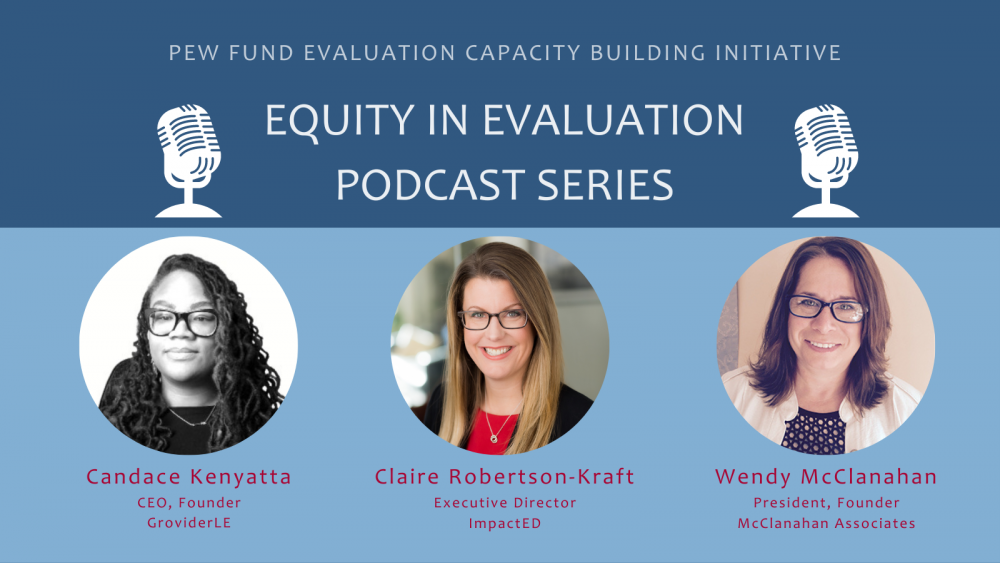
All organizations start their journey in the ECBI by learning about equitable evaluation. Our Equity in Evaluation podcast explores the history of evaluation, unpacks the equitable evaluation framework, and features real stories and examples that highlight both the challenge and value of engaging in equitable evaluation practices. Hosts Claire Robertson-Kraft of ImpactED, Wendy McClanahan of McClanahan Associates, and Candace Kenyatta of Grovider Learning and Evaluation, share their own experiences and lessons learned through their capacities as trained evaluators, evaluation practitioners, and nonprofit leaders.
- Episode 1 introduces the concept of equitable evaluation. You’ll hear our hosts and Meridith Polin, Senior Program Officer at the Pew Charitable Trusts, share their backgrounds and tell stories from their experiences in the research and evaluation field. This episode focuses on the impacts of traditional evaluation practices and how moving towards equitable evaluation better supports and engages the community being served.
- Episode 2 talks about the people and purpose or the who and why of equitable evaluation. With an emphasis on the values underlying equitable evaluation, this episode focuses on how to advance equity in your evaluation efforts while aligning them with your organization’s mission. You’ll hear about what it means to shift away from traditional evaluation orthodoxies and build stronger relationships with the community you serve.
- Episode 3 welcomes special guests Kate Callahan and Saxon Nelson from Research for Action (RFA), into the conversation. The episode focuses on the process and practice or the what and how of equitable evaluation. The hosts explore the FIRM framework – Feasible, Inclusive, Relevant, Meaningful – as a way to help organizations embed equity in each stage of the evaluation process. You’ll hear concrete examples of what this looks like in practice, including RFA’s organizational work towards becoming a community-engaged research institution.
As you listen to the podcast, below are some resources to learn more about equitable evaluation and how to apply these practices to your work:
- Equitable Evaluation Mindsets: This EEI resource provides an overview of the mindsets/mindset shifts needed to engage in equitable evaluation.
- Evaluation Orthodoxies: This EEI resource is referenced in episode 2. It builds on the traditional beliefs about evaluation and explores how they show up for different evaluation participants.
- How Nonprofits Can Incorporate Equity into Their Measurement, Evaluation, and Learning: This Bridgespan Group article looks at at each stage of evaluation and how to embed equity throughout the process.
- The Spectrum of Community Engagement to Ownership: This guide from Facilitating Power lays out the spectrum of community engagement that can be used to assess and revolutionize efforts in order to advance community-driven solutions.
- Top 5 Insights from RFA’s Community Research Partnership: To complement episode 3, this report includes insights and learnings from RFA’s journey of becoming a community-engaged research institution. You can listen to RFA’s accompanying podcast episode here.
Listen to episodes 1, 2 & 3 and consider how you might be able to use these insights for your evaluation work! If you or your organization have any questions or comments to share, please reach out to Sara at sgreenfield@maieval.com